
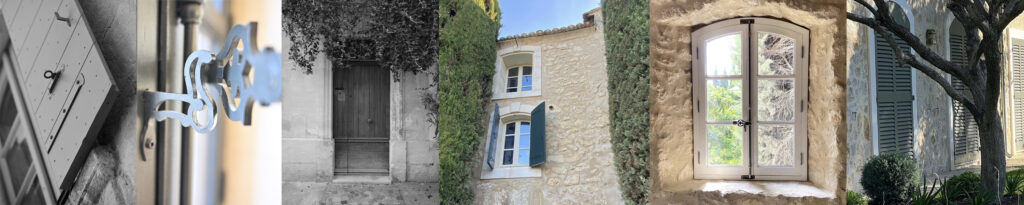
It is possible to improve the thermal and acoustic comfort of a building without replacing its original windows.
The performance of a traditional window does not depend on glazing alone. It also relies on air tightness, overall condition, the quality of the joints and assemblies, and the way the window performs as a whole.
Today, these aspects can be assessed through testing methods based on real conditions. They show that an old window can often be improved significantly when the right intervention strategy is applied.
Our work aims to improve both thermal and acoustic comfort while preserving the character of the existing joinery.
Why improve existing windows?
Old timber windows are often considered inefficient by default. In reality, their performance varies greatly depending on their condition.
Heat loss is often linked not only to the glass itself, but also to air leakage, poor adjustment, worn joints, and local defects in the assembly.
A careful intervention can therefore improve comfort substantially without requiring full replacement.
The main improvement factors
Several elements contribute to the overall performance of a traditional window:
- air tightness
- glazing performance
- condition of the timber sections
- quality of joints and assemblies
- accurate adjustment of the opening parts
Taken together, these elements determine how the window performs in everyday use.
A major lever: upgrading the glazing
Today, glazing replacement is one of the most effective ways to improve the performance of traditional windows.
Single glazing offers very limited thermal and acoustic protection. By contrast, modern high-performance solutions such as slim double glazing or vacuum glazing can significantly reduce heat loss while remaining compatible with historic timber windows.
These products are designed to fit older profiles, either within the original rebate or with only limited adaptation. They make it possible to improve comfort while retaining the existing joinery and its architectural character.
Upgrading the glazing also improves acoustic comfort and reduces the cold surface effect often felt near old windows in winter.
The importance of air tightness
Testing also shows that air leakage plays a major role in overall heat loss.
Even a good glazing system will not perform properly if the window is poorly sealed or badly adjusted.
This is why glazing upgrades should be considered alongside careful repair work, including adjustment of the sashes, improvement of sealing lines, and correction of local defects where needed.
Thermal and acoustic comfort
A well-restored traditional window can provide a real improvement in indoor comfort.
Thermally, the aim is to reduce draughts, limit heat loss, and improve the internal surface temperature of the glazing and timber sections.
Acoustically, better sealing and more efficient glazing help reduce outside noise, especially in urban environments.
The result is not to turn an old window into a standard modern product, but to improve its performance in a way that remains consistent with the building.
A balanced approach
Each window must be considered individually.
Its dimensions, profile, construction, condition, and heritage value all influence the type of intervention that is appropriate.
The goal is not systematic replacement, but a balanced approach based on repair, adaptation, and targeted upgrading where it is technically and architecturally justified.
Conclusion
Improving comfort does not always mean replacing original windows.
With the right combination of repair, adjustment, sealing, and high-performance glazing, traditional timber windows can achieve a much better level of thermal and acoustic comfort while preserving the identity of the building.
Who we are ?
Heritage Bois is led by Débora and Terence, brought together by a shared sensitivity to historic buildings and traditional craftsmanship.
Their approach is based on a careful reading of existing structures, a strong understanding of traditional techniques, and a commitment to preserving both the original material and the architectural balance.
Trained in heritage conservation schools, they advocate a measured approach, tailored to each building, combining restoration, improvement, and transmission.

Débora
With over 10 years of experience in joinery, my work focuses on the preservation of heritage and resources.

Térence
I have been working in timber joinery from a young age and am part of the fourth generation of joiners in my family.
Contact-us
If you have any questions, please do not hesitate to contact us. We will respond as soon as possible.
Adresse
Atelier 2 zone artisanale route d’Aramon 30300 Vallabregues
Contact
06 63 18 44 93
contact@heritagebois.fr
Opening Hours
| Monday | 8h-18h |
| Tuesday | 8h-18h |
| Wednesday | 8h-18h |
| Thursday | 8h-18h |
| Friday | 8h-17h |
traditional timber windows
heritage window restoration
high-performance glazing for old windows
improve old window insulation
acoustic and thermal upgrade of historic windows